


Calcium channel blockers (CCBs) are essential drugs for managing cardiovascular conditions like hypertension and angina. They are divided into two main subclasses: non-dihydropyridines and dihydropyridines, each with distinct properties and clinical uses. Let’s break down the information into easy-to-understand charts and key points.
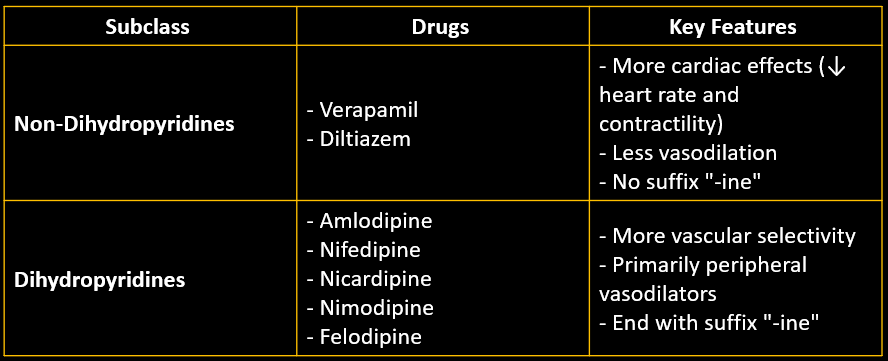
Classification of Calcium Channel Blockers

Mechanism of Action
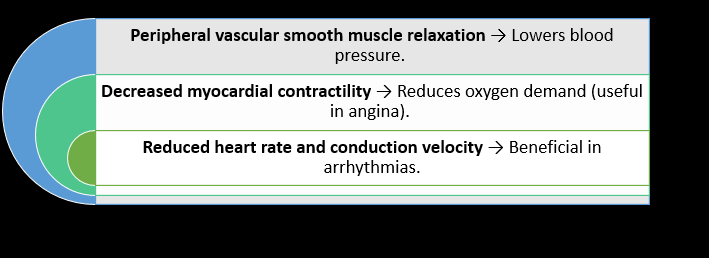
CCBs inhibit calcium entry into cardiac and vascular smooth muscle cells via L-type calcium channels, leading to:
Indications

Side Effects


Clinical Considerations and Pearls
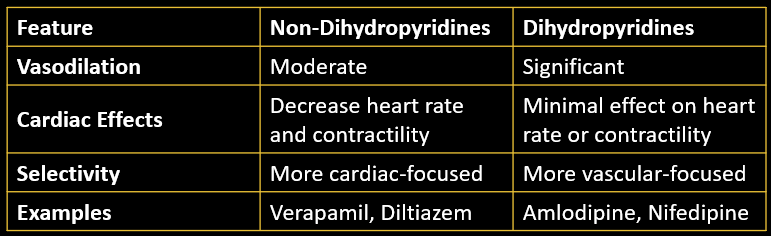
Comparison of Non-Dihydropyridines vs. Dihydropyridines
Tips for Memorization
- Suffix Difference:
- Non-dihydropyridines = No suffix “-ine” (e.g., verapamil).
- Dihydropyridines = End with “-ine” (e.g., amlodipine).
- Side Effects Clue:
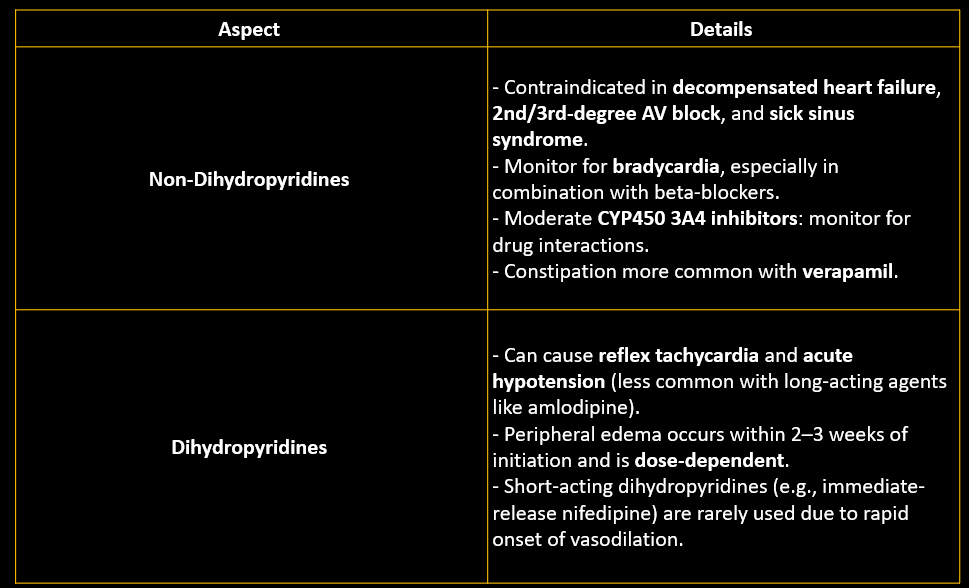
- Non-dihydropyridines → Constipation, cardiac output worsening.
- Dihydropyridines → Edema, flushing, headache.
- Clinical Tip:
- Reflex tachycardia is more common with short-acting dihydropyridines, less with long-acting agents.

Conclusion
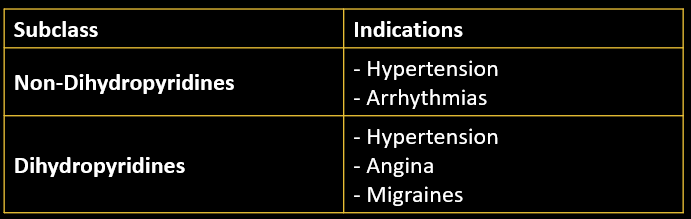
Calcium channel blockers are versatile medications used to manage hypertension, angina, and arrhythmias. Understanding their subclass differences, mechanisms, and clinical considerations is key to optimizing patient care. With their distinct profiles, non-dihydropyridines focus on cardiac effects, while dihydropyridines emphasize vascular relaxation.
By mastering these concepts, students can confidently navigate pharmacotherapy discussions and clinical applications.
For more expert guidance, insightful articles, and subject-focused resources made easy for students, visit the Elite Expertise blogs page. Stay informed and empowered as you progress in your pharmacy journey!